Salivary Gland Surgery
What is salivary gland surgery?
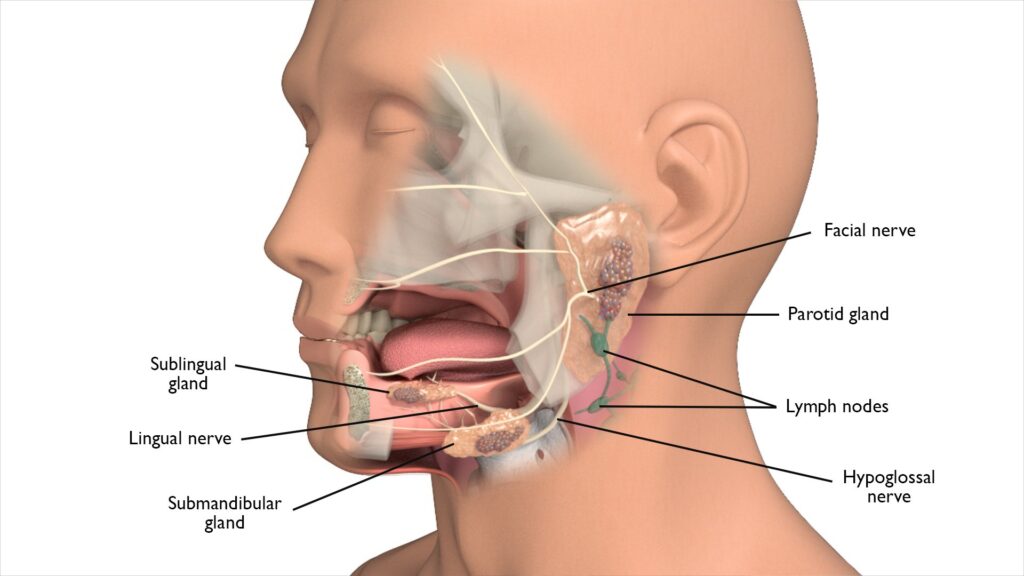
Salivary glands in your mouth produce and release saliva to keep the mouth moist and help you digest food. There are three pairs of major salivary glands and multiple smaller ones. The major glands are found in your cheeks, called parotid glands, under your jaw, called submandibular glands, and under your tongue, called sublingual glands.
Reasons for surgery
- Cancer and other non-cancerous conditions can develop in the salivary glands.
- The salivary glands can also become blocked by small hardened mineral deposits, known as salivary stones.
- Chronic infections or inflammation - e.g Sialadenitis
- Persistent or painful swelling not responding to other treatments
Pre-Operative instructions
- Fasting - Patients will need to fast before surgery - usually 6 hours for food and 2 hours for clear fluids. You will receive instructions from Dr Kelly, the hospital or anaesthetist.
- Medications- Please inform Dr Kelly of all the medications you are taking, especially blood thinners, weight loss etc as these may need to be post phoned for your saftey.
- Illness - If you develop a cold, fever, or other illness before your procedure, please contact our clinic. Your surgery may need to be post phoned for your saftey.
Types of procedures
Salivary gland surgery is performed in hospital under general anaesthetic. The type of surgery you need depends on your condition.
Common types of salivary gland surgeries include:
- Parotidectomy – surgery to remove part or all the parotid gland in your cheek.
- Submandibular gland excision – surgery to remove a tumour or stone blocking the submandibular gland under your jaw.
- Sialendoscopy – a minimally invasive surgery to remove salivary stones blocking the salivary duct, usually under the jaw but also in the cheek, using small incisions and small instruments. For larger stones, the salivary gland may need to be removed as well.
What should I expect after surgery?
After surgery, you can expect some swelling and discomfort in your face and numbness around your incisions. It is possible to have some temporary nerve weakness in your face. Your surgeon will explain any risks and outline what to expect after surgery.
Most people will return to work the next day after sialendoscopy, while recovery after salivary gland removal may take longer, usually 1 to 2 weeks.
Parotidectomy recovery requires patience as tissues and facial nerves heal. While you can usually return to work and light activities within 1 to 2 weeks, complete healing takes approximately 3 to 12 months.
Recovery time depends on the type and reason for your surgery.
Post Operative Instructions
You will be given instructions for post operative care prior to your surgery.