Turbinate Reduction Surgery
Surgery on the nasal turbinates may be performed in isolation however is frequently performed in conjunction with Septoplasty or Sinus Surgery.
What are Turbinates?
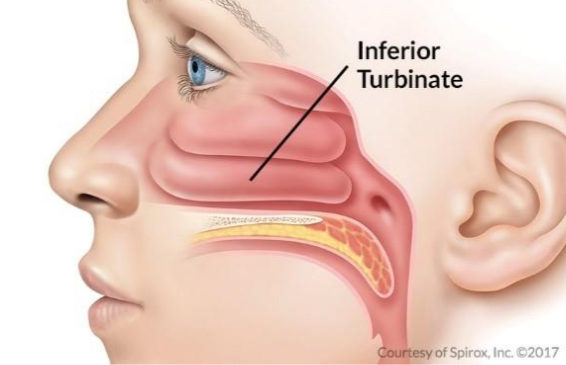
On each side of the nose there are three turbinates, superior middle and inferior. These are bony fins projecting into the airway. It is most commonly the inferior turbinates that causes issues with the nasal airway. Occasionally the middle turbinate is enlarged, as in the scan on this page, and may need to be dealt with as well.
The inferior turbinate is covered with rich vascular tissue. Its function is to warm and humidify the inspired air. It projects from the side wall of the nasal cavity low down and extends the full length of the nasal cavity.
Indications for turbinate surgery
The principal indication for surgery on the turbinates is nasal obstruction due primarily to enlargement of the inferior turbinate. Typically, nasal obstruction due to the inferior turbinates is worse at night and may often swap from side to side with changes in position. When lying flat the nose is no longer above the heart resulting in increased venous pressure in the head and neck and less efficient drainage of blood from the inferior turbinate.
The operation
There are a range of procedures used in different circumstances. Dr Kelly will advise which suits your condition the best.
After surgery
It is usually a day procedure. It is not uncommon to have some bleeding on the first night. Pain is not normally a major feature.
Diet
Following nasal surgery, it is best to avoid food and drinks that are too hot as they may increase bleeding. A cool to warm normal diet is satisfactory.
Activity
Because the nose is such a vascular structure excessive physical activity may provoke bleeding. Strenuous physical activity is best avoided for one - two weeks.
Pain relief
Pain is not normally severe following nasal surgery, but the nose will be blocked.
Surgery on the nose does however result in the release of natural compounds called inflammatory mediators. These are the same compounds that are released in viral infection, and it is not at all unusual to have symptoms like a virus, such as lethargy and headache.
Paracetamol or ibuprofen is normally sufficient. Salt-water nasal sprays or douches are also recommended and help clear some of the mucus and congealed blood.
Nose blowing
It is best to avoid nose blowing from the first few days as excessive or vigorous nose blowing may precipitate bleeding. Thereafter the nose may be blown gently, both nostrils open at the same time.
Nasal obstruction
It is normal to have some nasal obstruction for several days to a week following turbinate reduction. This is due to swelling and congestion in a confined space. Sleeping with the head elevated may help to some degree.
Bleeding
It is normal to have bloody mucous discharge from the nose or an occasional small fresh bleed for a few days after the operation. If bleeding is heavy or prolonged, you should contact me.
Post operative instructions
You will be given instructions for care prior to your surgery along with your surgery booking information and upon discharge.
When to Contact a doctor:
If you experience any of the following, please go to the emergency department of where you had your surgery
- Heavy, persistent bleeding,
- Fever.
- Severe pain not relieved by medication.
- Clear, watery fluid dripping continuously from the nose