Septoplasty - Nasal Surgery
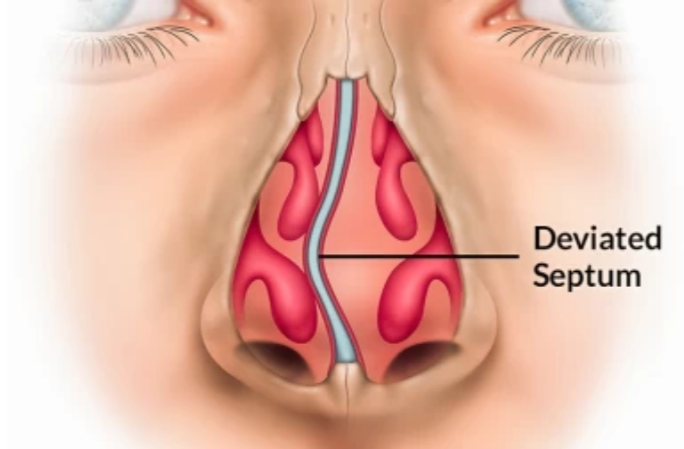
Septoplasty is an operation to straighten the nasal septum.
What is the Nasal Septum?
The nasal septum is the wall between the left and right nasal cavities. It extends from the tip of the nose to the back of the nasal cavity and from the floor of the nasal cavity, where it is attached to the hard palate, to the roof of the nasal cavity where is attached to the skull base.
The front portion of the nasal septum is composed of cartilage which is relatively soft and pliable. The back of the nasal septum is made of bone.
Indications for Septoplasty
The nasal septum is rarely perfectly straight. Minor deviations of the nasal septum are not significant. In some instances, there may be more significant deviations or bends in the septum particularly with previous trauma. Often the trauma can be a relatively minor event in childhood that puts creases in the cartilage resulting in significant deviations with growth.
Septoplasty to correct these deviations may be considered in the following circumstances.
Nasal obstruction
Cosmetic deformity of the external nose relating to underlying deviations of the septum
Access to other areas of the nose in sinus surgery
Some cases of snoring and sleep apnoea
Septoplasty is frequently done in conjunction with turbinate surgery. More information on turbinate surgery can be found here.
The operation
Septoplasty is performed in hospital usually under a general anaesthetic. An incision is made just inside the nostril on one side. The soft tissue overlying the nasal septum is elevated to allow access to the bony and cartilaginous septum. Once a good view has been obtained posterior bony deviations are removed and the cartilage is refashioned to construct straight septum. It is important that most of the cartilage at the front of the nose is preserved to maintain support for the external nose.
The incision is then closed with dissolving sutures and in most cases a light nasal pack is left in place overnight to control bleeding.
After surgery
The procedure is usually day surgery. It is not uncommon have a small amount of bleeding on the first night. Pain is not normally a major feature.
Diet
Following nasal surgery, it is best to avoid food and drinks that are too hot as they may increase bleeding. A cool to warm normal diet is satisfactory.
Activity
Because the nose is such a vascular structure excessive physical activity may provoke bleeding. Strenuous physical activity is best avoided for one - two weeks.
Pain relief
Pain is not normally severe following nasal surgery, but the nose will be blocked.
Surgery on the nose does however result in the release of natural compounds called inflammatory mediators. These are the same compounds that are released in viral infections, and it is not at all unusual to have symptoms like a virus, such as lethargy and headache.
Paracetamol or Ibuprofen are normally sufficient. Salt-water nasal sprays or douches are also provided and help clear some of the mucus and congealed blood.
Nose blowing
It is best to avoid nose blowing from the first few days as excessive or vigorous nose blowing may precipitate bleeding. Thereafter the nose may be blown gently, both nostrils open at the same time.
Nasal obstruction
It is normal to have some nasal obstruction for several days to a week following Septoplasty. This is due to swelling and congestion in a confined space. Sleeping with the head elevated may help to some degree.
Post operative instructions
You will be given instructions for care prior to your surgery along with your surgery booking information and upon discharge.
When to call the doctor
If you experience any of the following, please go to the emergency department of where you or your child had their surgery
- If bleeding is heavy or prolonged - It is normal to have bloody mucous discharge from the nose or an occasional small fresh bleed for a few days after the operation
- Fever
- Severe pain not relieved by medication
- Clear watery fluid dripping continuously from the nose