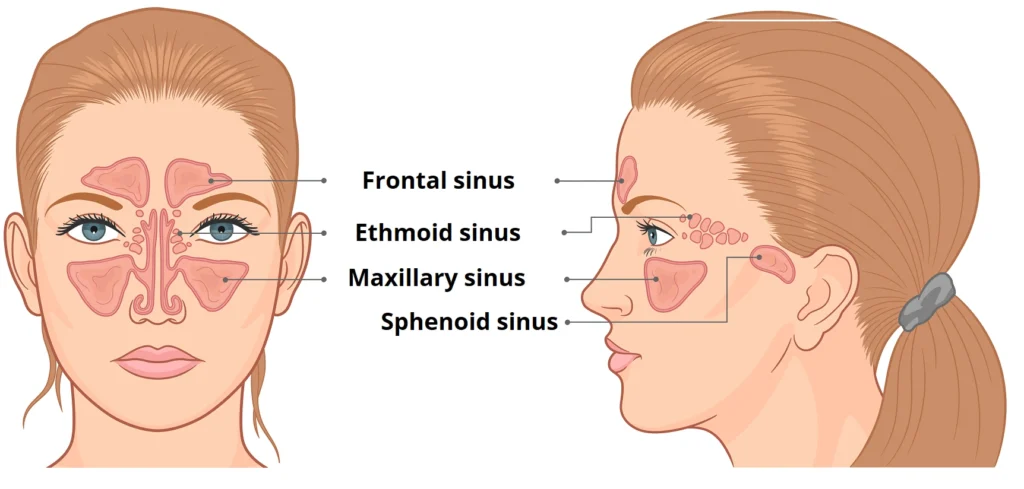
Functional Endoscopic Sinus Surgery
Functional Endoscopic Sinus Surgery (FESS) is a minimally invasive surgical procedure performed through the nostrils to treat chronic sinus infections and nasal polyps. It removes obstructions like nasal polyps or swollen tissue to improve sinus drainage, relieve pressure, and restore smell.
FESS maybe recommended if you:
- Have recurrent acute sinusitis, chronic sinusitis, nasal polyps and allergic rhinosinusitis that doesn’t respond to medication.
- Frequently used antibiotics or nasal sprays with little relief.
- Experience persistent congestion, headaches, or loss of smell.
How it works
- Under general anaesthesia, an Ear, Nose, and Throat (ENT) specialist inserts an endoscope to visualise the sinus cavities, subsequently removing diseased tissue, bone, or polyps.
- Dissolvable packing will most often be placed in the nasal cavity. This does not need to be removed and will dissolve within a few days. In a minority of cases, removable plastic splints may be placed inside the nose which are removed a week after your surgery by Dr Kelly.
- Most patients can be discharged on the same day and will require someone to take them home and it is recommended you allow at least 7-10 days away from work and/or studies. Depending on the nature of the surgery, some patients may require a longer period off work.
Aftercare
- You must commence nasal washes the day after surgery. It is recommended you do not blow your nose for 48 hours after surgery.
- It may take several weeks for your nasal symptoms to resolve. During this period, you may require antibiotics, anti-nasal washes or nasal sprays to aid healing of the sinuses.
- Sport or vigorous exercise should not be undertaken for 2 weeks.
- You can expect to develop significant blockage and tenderness of the nose as well as headaches in the days after the surgery. These symptoms may be quite pronounced for 1 to 2 weeks.
- Small amounts of blood from the nose in the initial days after surgery is common.
- Pain relief should be taken regularly for maximal effectiveness.
Post Operative Care Instructions
You will be given instructions for care prior to your surgery along with your surgery booking information or click on the link between Nasal and sinus surgery.
When to call your doctor
- High fever.
- Excessive bleeding that won’t settle with simple measures like compressing the nasal.
- Excessive swelling of the nose or near any incisions in the nose.
- Visual disturbance or severe headache.
- Persistent nausea or vomiting.