Overview
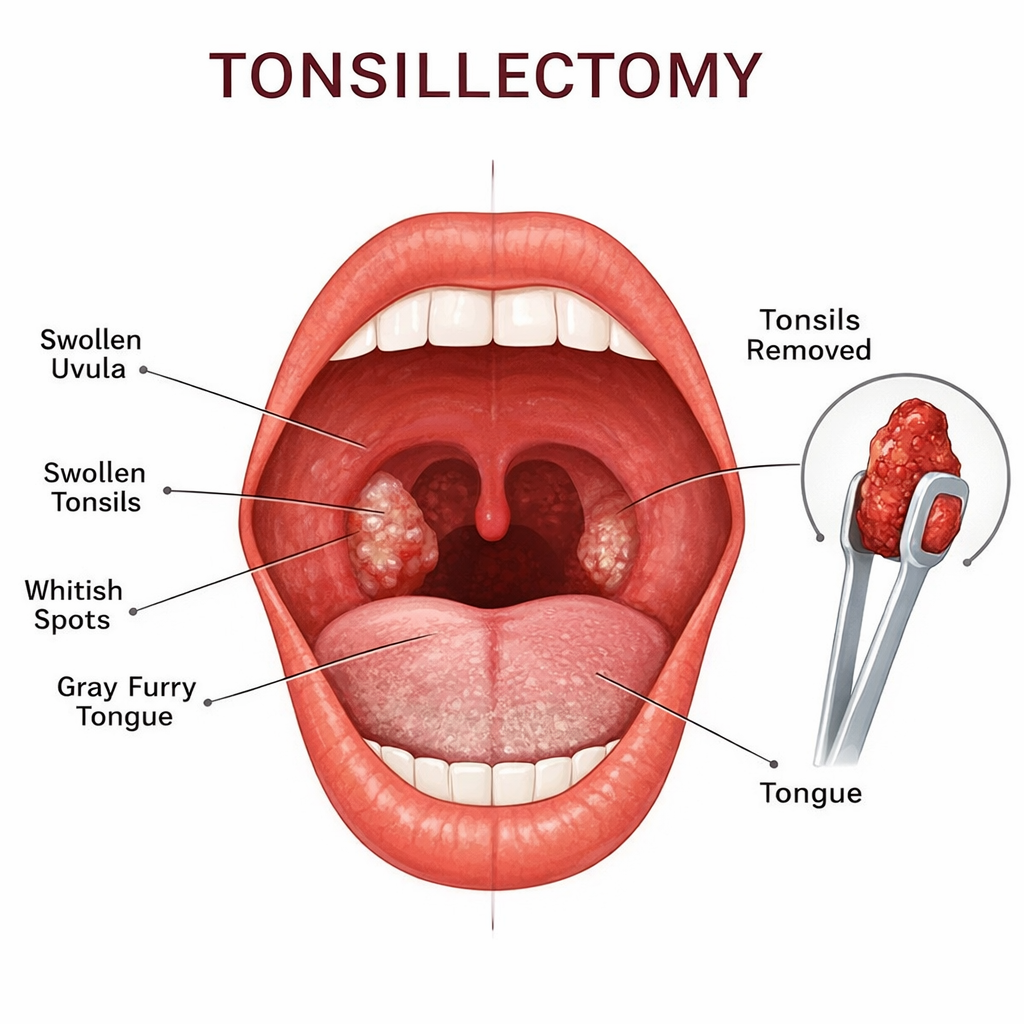
Tonsils are collections of lymphoid tissue in the oral cavity. There is a tonsil on each side at the back of the mouth, and they are usually visible with the uvula hanging down between them.
Being lymphoid tissue, they play a role in immune function. There is however a lot of other lymphoid tissue in the head and neck, so the immune system does not rely entirely on the tonsils for defence against bacteria and viruses. No studies have shown an increase in upper respiratory infections if the tonsils and adenoids have been removed.
Who It Helps
Tonsillectomy is indicated for
- Recurrent acute tonsillitis
- Snoring and/or obstructive sleep apnoea
- Chronic tonsillitis
- Quinsy
What Happens
The Operation
Tonsillectomy is performed in hospital under general anaesthesia. There are many ways to remove the tonsils, including diathermy dissection, coblation, partial tonsillectomy and the use of a device called Bizact.
After The Operation
Many tonsillectomy patients are suitable for same day discharge. Some patients may also need to stay overnight. Dr Kelly will discuss your specific situation.
Recovery Information
Diet
A normal diet post operatively is important as the passage of food keeps the tonsil beds clean. A soft diet such as soups and ice cream does not do this as effectively as meat, bread and vegetables.
Activity
Recovery from tonsillectomy takes a good 7 to 10 days and time off work or school is required. Because of the small risk of delayed bleeding, do not recommence sport, running, weights or other strenuous activity for two weeks, and stay within 1 hour of the hospital where you had surgery.
Pain Relief
Tonsillectomy in adults is often quite uncomfortable. It is not unusual for the pain to improve over the first few days and then worsen again around days 5 to 7 as the inflammatory reaction peaks. Referred pain into the ears is also common. Paracetamol and Ibuprofen should be taken regularly on an alternating basis. Some stronger pain relief will be prescribed on discharge.
Appearance Of The Tonsil Beds
After the tonsils have been removed, the pockets they sit in are left open. They become covered with a layer of yellow/white slough. This is a normal appearance and does not indicate infection. The breath is normally quite smelly.
Bleeding
Bleeding after tonsillectomy occurs in around 4% of cases. It most commonly occurs the first night whilst in hospital or at around a week post operatively. Delayed bleeds are usually minor, however readmission to hospital for observation is usually recommended if bleeding does not stop promptly. A very small number of patients need to return to the operating theatre.
When To Contact A Doctor
Occasionally bleeding occurs up to two weeks after surgery. If bleeding occurs, wait 15-20 minutes. If it stops then no further action is needed. If bleeding continues go directly to the emergency department of the hospital where you had your surgery.
Post-Operative Care Instructions
Detailed aftercare guidance for your surgery, to keep and refer back to.
Frequently Asked Questions
Will removing my tonsils affect my immune system?
No studies have shown an increase in upper respiratory infections after the tonsils and adenoids have been removed, as there is a lot of other lymphoid tissue in the head and neck.
Can I go home the same day?
Many tonsillectomy patients are suitable for same day discharge, while some may need to stay overnight. Dr Kelly will discuss your specific situation.
How long does recovery take?
Recovery takes a good 7 to 10 days. Avoid sport and strenuous activity for two weeks because of the small risk of delayed bleeding.
Is the white coating in my throat an infection?
No. The tonsil beds become covered with a yellow/white slough after surgery. This is a normal appearance and does not indicate infection.